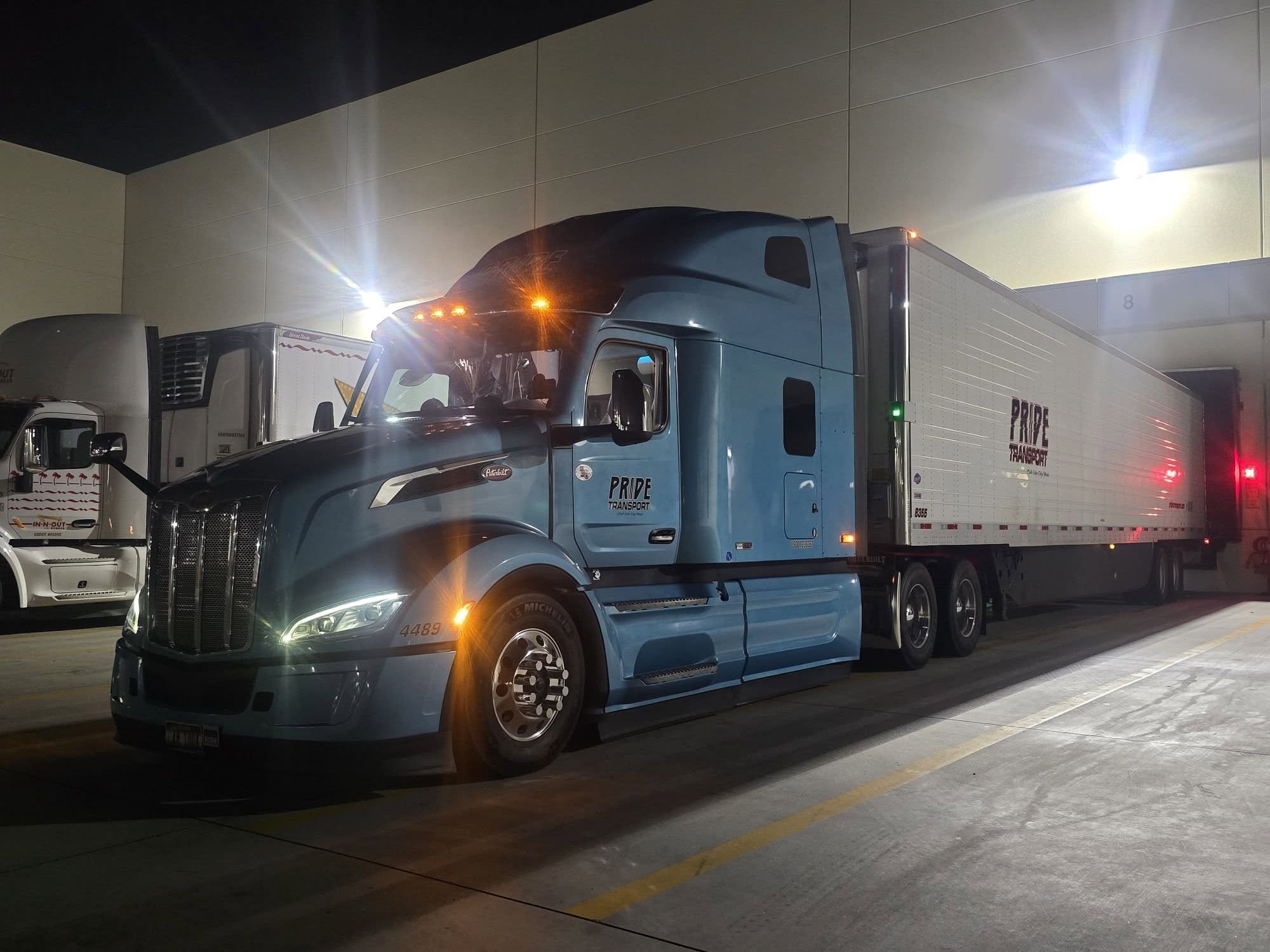
by Pride Transport | Dec 03, 2025
Refrigerated trailers (also called reefers) are among the most sensitive cargo drivers can haul. Many shipments must maintain precise temperatures to remain safe and usable, including produce, dairy, pharmaceuticals, and frozen goods. Even short temperature deviations can lead to rejected loads, lost revenue, and damaged customer relationships.
As a driver, knowing how to handle a reefer breakdown is essential. The right steps can prevent product loss, protect your earnings, and demonstrate professionalism. This guide explains the reefer breakdown steps to follow, how to manage a reefer truck temperature log, and what to do if the reefer unit fails so you can respond quickly and effectively.
The High Stakes of Reefer Failures
Reefer units are designed to maintain temperature within tightly controlled ranges. When a unit fails, the internal temperature can rise quickly, leading to:
- Spoiled or unsafe product
- Load rejections and claims
- Chargebacks and lost contracts
- FDA and FSMA compliance issues
- Damage to a driver’s reputation
Common causes of reefer failure include:
- Mechanical failures (compressors, belts, electrical components)
- Low or empty reefer fuel tank
- Sensor or thermostat malfunctions
- Refrigerant leaks
- Battery or alternator problems
- Operator error or incorrect settings
- Doors left open or improperly sealed
Understanding the potential causes helps, but at the time of failure your priority is protecting the cargo and following proper protocol.
Step 1: Secure the Truck and Assess Calmly
The first and most important step is to remain calm. If an alarm sounds or you notice temperature fluctuations, safely pull off the road as soon as possible. Find a safe shoulder, truck stop, or rest area. Turn on hazard lights to alert other drivers that your vehicle is stationary.
Safety must always come first. Remaining calm and methodical helps prevent mistakes and reduces the risk of miscommunication with dispatch or others who may need to assist.
Step 2: Verify Basic Reefer Functions Before Calling for Help
Many reefer issues can be resolved with a few quick checks before calling for service. First, make sure the unit is turned on and has enough fuel. Confirm that the set temperature matches the bill of lading, and ensure the doors are fully closed and sealed. Check the control panel for any alarms or error codes. If the unit allows a reset and you are trained to perform one, you can attempt a restart, but never try to repair mechanical components unless you’re qualified. Your role is to assess and report, not to perform repairs.
Step 3: Keep Dispatch Informed to Protect the Load
Once you have verified the basics and ensured your safety, notify dispatch immediately. Prompt and clear communication helps protect the freight and allows the carrier to coordinate the most effective response, minimizing potential product loss or delays.
When contacting dispatch, provide as much detail as possible to help them assess the situation quickly and accurately. Start by sharing the reefer’s status along with any alarm codes displayed on the unit. Include the current trailer temperature so they can understand the condition of the cargo, and note the load type, if known, to help determine urgency and proper handling. Be sure to give your exact location to streamline service or guidance, and mention when the unit stopped working to establish a timeline. Finally, report the fuel level in the reefer tank to rule out low fuel as the cause of the issue.
Effective communication enables the carrier to take immediate and informed action, like contacting the customer, arranging for service, and transferring or rerouting the load. They can also evaluate risk based on the product type, temperature tolerance, and elapsed time. They will also document the timeline and actions taken, which is critical for claims protection and accountability.

Step 4: Maintain Emergency Reefer Logs for Protection
When a reefer unit fails, manual temperature logging becomes critical. Electronic systems may not update properly during failure, so you must keep a reefer truck temperature log manually.
Log the following information every 15 to 30 minutes:
- Date and time
- Internal trailer temperature
- Location
- Notes about reefer unit status
Record temperatures consistently until the unit is repaired or the load is transferred. These logs protect you by demonstrating due diligence and are vital for insurance and receiver reviews. Have printed or digital logs accessible in your truck at all times.
Step 5: Document Everything
When a reefer unit fails, product integrity is at risk, and shippers expect accountability. Even if a breakdown is unavoidable, clear and detailed documentation demonstrates that you acted responsibly, followed company procedures, and made every effort to preserve the load. This transparency can protect you legally, support insurance claims, and reinforce trust with dispatch and customers. Key items to record and save include:
- Manual temperature logs: When electronic reefer logs are unavailable or unreliable, manual entries provide proof that temperatures were monitored consistently. Record the date, time, temperature, location, and any relevant observations at regular intervals, ideally every 15–30 minutes.
- Pictures of alarm screens or error messages: Alarms and control panel notifications provide objective evidence of the reefer’s status. Take clear, legible photos so the messages can be referenced later by dispatch, maintenance, or claims representatives.
- Fuel gauge photos: A photo showing the reefer fuel level helps confirm that the unit was properly fueled and that any shutdown was not caused by driver negligence.
- Any unusual noises or visible damage: If the reefer makes unusual sounds, emits smoke, or shows signs of damage, note these observations in writing or with photos and videos. They help technicians diagnose the issue and strengthen your documentation.
- BOL notes regarding temperature issues: Notations on the bill of lading about the temperature at pickup, during transit, and at stops demonstrate proactive attention to cargo conditions and can be used to verify compliance with temperature requirements.
- Messages and call records with dispatch: Record the time, content, and outcome of each communication. Include any instructions received and confirmations from dispatch. These records show that you promptly reported the issue and followed company guidance.
Save electronic copies whenever possible. Email or upload photos, logs, and notes to a secure company folder or cloud storage. This ensures the records are accessible even if physical copies are lost. Organize logs, photos, and communications by date and time to create a clear timeline of events. Include all relevant details without overloading notes with unnecessary commentary. Clear, factual documentation is more effective than lengthy narrative. Avoid waiting until the end of the trip to compile notes. Real-time documentation is more accurate and easier to verify.
Step 6: Prevent Future Breakdowns with Smart Practices
Breakdowns can happen even with proper procedures, but many issues are preventable. Strong habits and ongoing training help reduce risk. Before every trip, check reefer fuel levels, start and test the reefer unit, verify temperature settings, and inspect door seals and trailer condition.
During transport, proactively monitor the reefer unit. Check the reefer display at each stop to ensure the temperature remains within the correct range. Minimize the time the doors are open at shippers and receivers, because prolonged exposure to outside air can quickly impact the internal temperature and strain the unit. Refill or top off the reefer fuel regularly to prevent unexpected shutdowns. Document temperature checks as required by your carrier.
Ongoing training on reefer technology, operational procedures, and troubleshooting best practices is highly valuable for drivers. Staying up to date ensures you can quickly recognize and address potential issues. Pride provides resources and guidance to help drivers build confidence, maintain equipment properly, and remain prepared for any situation that may arise on the road.
Managing Reefer Failures Successfully
Reefer failures are stressful, but with the right approach they are manageable. Your primary responsibilities are to remain calm, protect the load, notify your carrier quickly, and document everything. When you follow proper reefer breakdown steps and keep detailed manual temperature logs, you protect the freight and yourself.
Driving Opportunities at Pride
At Pride, our dispatch and maintenance teams are ready to assist in breakdown situations to keep drivers safe and freight protected. If you're looking for a carrier that values professionalism and supports its drivers with reliable reefer operations, consider joining Pride Transport. View open positions and apply today.